· Eduardo Vieira · Strategy · 5 min read
The IT/OT Convergence: A Survival Guide for Industrial Leaders
How to stage IT/OT convergence through governed data flows, accountable ownership, validation, and approved production windows.
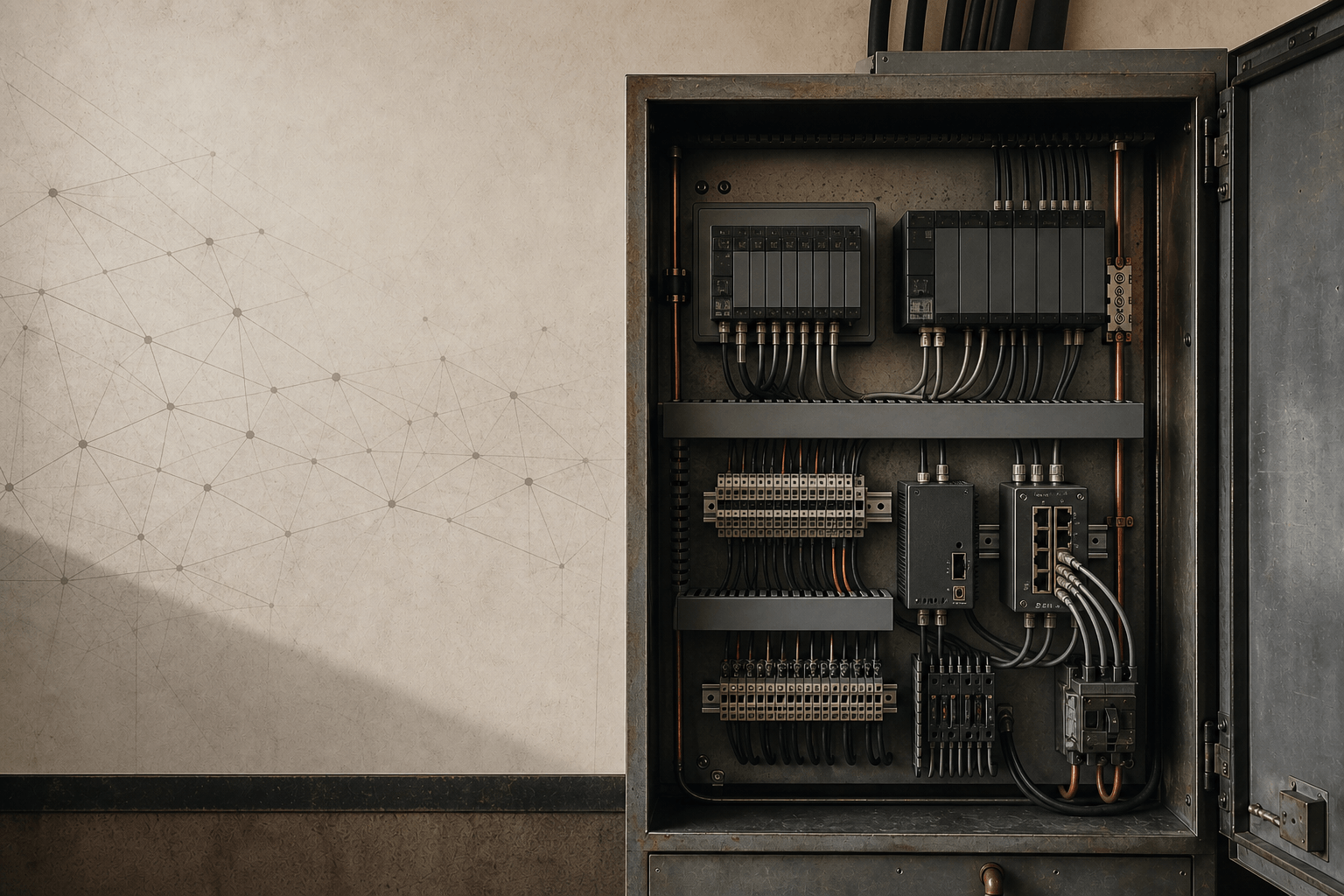
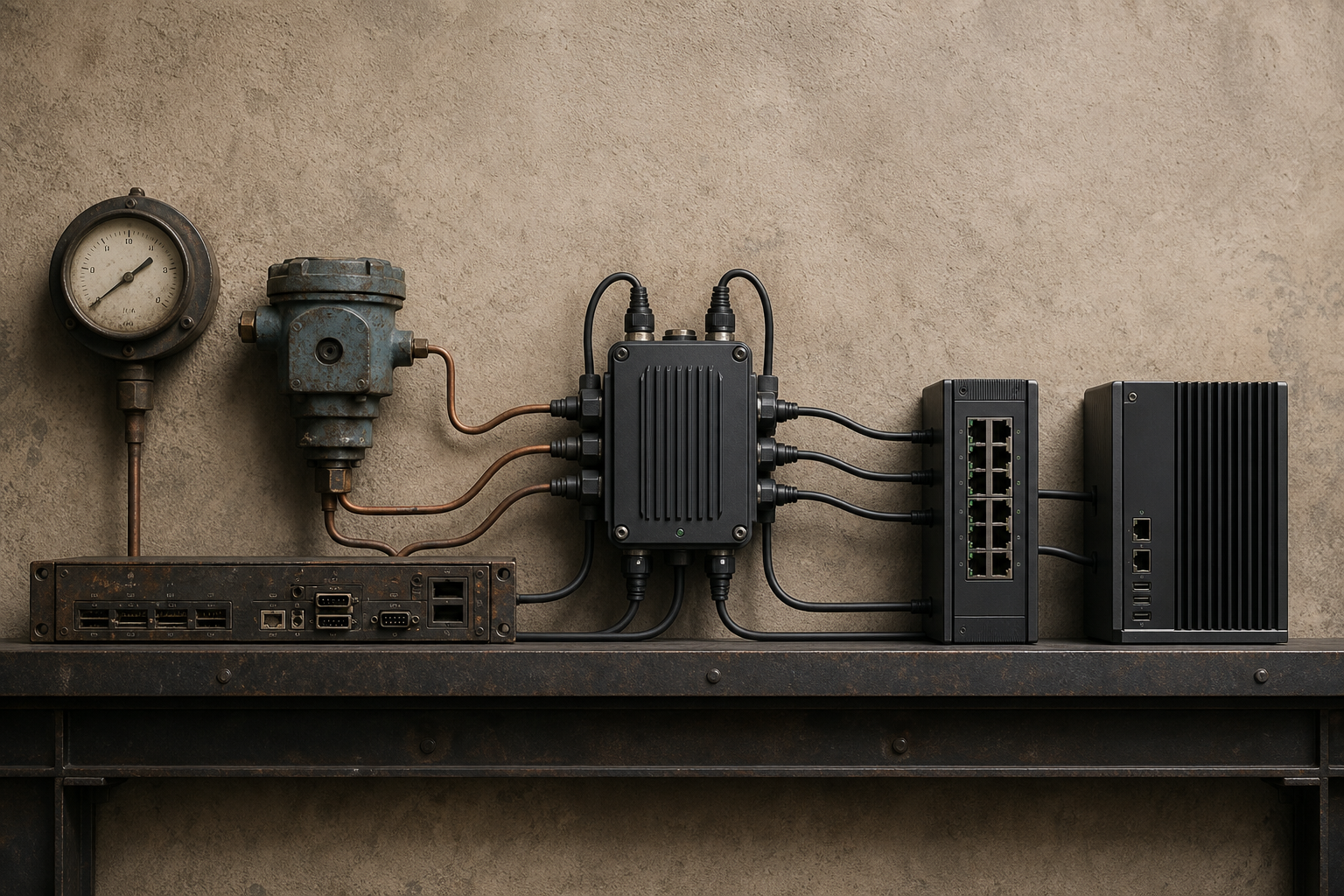
IT/OT convergence should create governed data exchanges, not one flat network. Information technology can provide identity, logging, analytics, and service management while operational technology retains authority over physical processes, safety constraints, and production windows. NIST SP 800-82 Rev. 3 explicitly treats performance, reliability, and safety as OT security requirements, so enterprise practices must be adapted rather than copied unchanged.
This is a vendor-neutral operating model, not a reference design for every plant. It does not promise Zero Trust, compliance, uninterrupted production, or risk elimination. Each site still needs a process hazard review, cybersecurity risk assessment, validated recovery procedures, and approval through its management-of-change process.
Begin with ownership, not equipment
Convergence stalls when everyone can request a connection but nobody owns its consequences. Use a small RACI for every cross-boundary service:
| Decision | Accountable | Responsible | Consulted |
|---|---|---|---|
| Process and safety impact | Plant manager | Control engineer | Safety, operations |
| Zone and conduit design | OT security owner | Network engineer | IT security, integrator |
| Data purpose and retention | Business data owner | Application owner | OT owner, privacy/legal |
| Change window and rollback | OT asset owner | Maintenance lead | Vendor, production |
The asset owner accepts operational risk. IT security defines enterprise controls; it does not unilaterally patch or scan controllers. Vendors receive bounded tasks and time-limited access, never permanent ownership. Record escalation authority and who can terminate a session or invoke rollback.
Partition zones and conduits
ISA/IEC 62443 uses zones to group assets with common security requirements and conduits to control communication between zones. That model is more useful than labels such as “trusted OT.” Start with process function and consequence: safety systems, basic control, supervisory systems, site operations, the industrial demilitarized zone (IDMZ), and enterprise services may require distinct zones.
The IDMZ is a buffer, not a synonym for the whole OT network. Terminate or broker cross-boundary services there: replicated historians, managed file transfer, jump hosts, update repositories, and log relays. Separate firewalls on the enterprise and control sides should implement independently reviewed rules. Do not route the enterprise network directly to PLCs, engineering workstations, or safety systems, and do not flatten VLANs merely to simplify discovery.
The Purdue-model OT cybersecurity checklist turns those zone and conduit decisions into reviewable evidence.
Specify data flows before firewall rules
Inventory each flow by owner, source, destination, direction, protocol, authentication, data sensitivity, frequency, retention, and failure behavior. Default-deny is meaningful only after required flows are documented. This deterministic example illustrates policy intent; it is an allow/deny matrix, not deployable firewall syntax:
| Source | Destination | Purpose | Verdict |
|---|---|---|---|
| OT historian | IDMZ replica | Publish approved process history | ALLOW |
| Enterprise analytics | IDMZ replica | Read approved history | ALLOW |
| OT log relay | IDMZ collector | Forward security events | ALLOW |
| Enterprise user | PLC | Direct programming | DENY |
| Internet vendor | Engineering workstation | Direct support session | DENY |
| IDMZ replica | Safety system | Control command | DENY |
The matrix deliberately permits no control commands across the boundary. A real policy also needs ports, endpoints, certificates, rate limits, monitoring, expiry, and a named owner.
Broker remote access
Remote support should enter through an approved access service and hardened jump host in the IDMZ, with named accounts, multifactor authentication where technically feasible, authorization for a specific asset and task, an approved time window, session logging, and rapid revocation. Disable access when the task ends. Avoid shared vendor accounts, split tunneling, unattended modems, and direct inbound paths to critical assets. Operations must be able to observe and terminate the session; emergency access needs a separately tested procedure.
The IEC 62443 and Zero Trust guide provides the policy-matrix view for those constrained sessions.
Make controls operable
An OT inventory should cover hardware, firmware, software, network location, function, owner, criticality, dependencies, supported versions, backup status, and remote-access paths. Maintain it through procurement, commissioning, change, and retirement. Passive discovery can supplement records, but active scanning requires OT approval and testing.
Federate identity where supportable, while keeping controlled local recovery accounts for loss of enterprise dependencies. Centralize authentication, configuration-change, firewall, jump-host, and security events with synchronized time. Do not assume every legacy device can produce useful logs; monitor its conduit and document the gap.
Patch and backup work belongs in production-approved windows. Test updates on representative systems, verify vendor constraints and recovery media, capture known-good controller logic and configurations, and define stop conditions. Backups are not evidence of recoverability: perform controlled restore tests and protect offline or immutable copies where appropriate.
Stage change and preserve rollback
- Baseline: confirm owners, inventory, diagrams, flows, backups, restore results, and acceptance criteria.
- Pilot: implement one low-consequence, read-only flow through the IDMZ; observe latency, load, logs, and failure behavior.
- Expand: add approved flows one at a time during change windows, with rule expiry and post-change review.
- Operate: reconcile inventory, review accounts and rules, exercise incident response, and measure recovery.
Every stage needs a rollback trigger, decision authority, last known-good configuration, validated restore path, communications plan, and evidence that rollback completed. If a change affects process safety or reliable control, stop and return to the approved state rather than improvising around the control system.
For supervisory changes, modern web HMI and SCADA applies the same staged-migration discipline.
Primary guidance
- NIST SP 800-82 Rev. 3, Guide to Operational Technology Security
- CISA, Configuring and Managing Remote Access for Industrial Control Systems
- CISA and partners, OT Asset Inventory Guidance
- ISA, ISA/IEC 62443 Series of Standards
- ISA public overview of zones, conduits, and risk-based design
Sources accessed 2026-07-24. The public summaries inform this article; they do not establish certification or compliance.